DATE
Rethinking school trusts’ operating models to thrive in a context of uncertainty
School trusts are education charities that run a group of schools. School trusts, like most public and private organisations currently, are operating in a challenging and rapidly changing context. Pandemic recovery, a deteriorating economic climate and ongoing education policy reforms have created a disruptive landscape for efficient and effective operations. To survive and thrive, and to deliver on their mission of improving young lives, trusts need to be proactive and embrace operational change.
The key drivers of operational change are:

Tightening budgets
Trusts will have to identify and deliver cost efficiencies, without compromising high-quality outcomes. This is particularly crucial currently with the ongoing squeeze on funding available to trusts alongside rapidly increasing costs.

The need to consolidate
This is partly driven by the expectation in the Department for Education’s recent Schools White Paper for all trusts to serve a minimum of 7,500 pupils or run at least ten schools. There is also a growing realisation that economies of scale can improve outcomes.

Provision of new and changing services
In recent years there has been a growing need for trusts to provide services beyond their core activities. One example is increased mental health support for young people, due to a reduction in the volume of services provided by Local Authorities and increased need resulting from the COVID-19 pandemic.
In light of these significant changes, trusts must adapt their operations to respond. The Moorhouse operating model framework provides a structured approach for trusts to review their current operations and develop their future operating model. The process starts with a review of the trust’s current operations to identify the present challenges and opportunities for improvement. The trust’s operating model can then be redesigned considering the seven operating model lenses outlined below and how each of them contributes to the agreed purpose and vision. A transformation roadmap then outlines the sequenced activities required to implement the redesigned operating model, detailing the resources needed to deliver this. Engaging relevant stakeholders throughout and ensuring the changes are implemented at an appropriate pace will minimise any detrimental impact to ongoing operations and maximise the benefits of the new operating model.
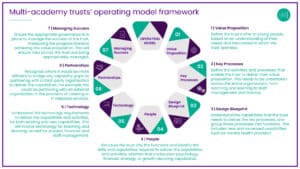
Moorhouse recently supported a group of schools to develop an improved operating model. The codesigned future operating model created the right environment for them to deliver their strategic ambitions. The transformation roadmap offered a clear plan of where to focus improvement efforts. This happened because they were given a comprehensive understanding of the current challenges and improvement opportunities in their operating model. The schools were then equipped with a series of design blueprints to implement the new operating model, including an integrated IT applications model; a consistent way to determine when to procure or deliver internally; and an improved governance approach (risk management, KPIs, and reporting).
Trusts must consider how they can adapt their operating model to proactively respond to the highly challenging environment they are currently operating in, whilst also maximising the opportunities available. A refreshed operating model will help trusts to realise their vision efficiently and effectively so all young people achieve their potential.