
DATE
Impact Stories for Black History Month
As Black History Month continues, members of our black community share what their heritage means to them.
What does being black mean to you?
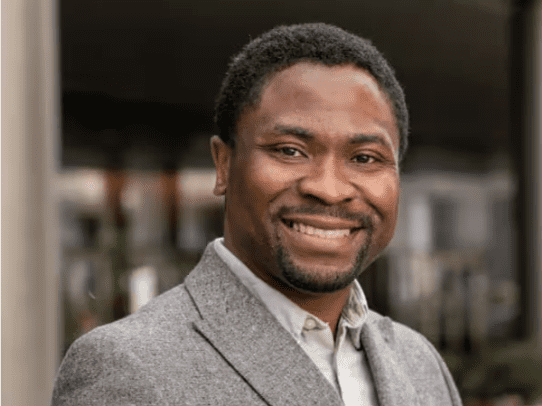
Zuby Okemefuna
“As a child growing up in Nigeria, I did not have a concept of being ‘black’. I was Igbo, Nigerian, African, human. My earliest exposure to the idea of ‘blackness’ was the tainted imagery of Hergé’s ‘The Adventures of Tintin’, Daniel Defoe’s ‘Robinson Crusoe’ and H. Rider Haggard’s ‘She’. I did not identify with those images – in fact, I had the luxury of seeing the characters as merely intriguing but nothing at all to do with me. As I have since matured into adulthood and partaken of a shared cultural experience beyond that which was simply mine, I came to recognise those misrepresentations for what they were. But even better, I have also come to a very personal discovery of what it means to be part of the Black community:
Black is golden; with a rich melanated fabric of culture embedded within a long tapestry of history. Black is strong; withstanding the greatest of setbacks, yet unbowed and forward-looking. Black is connected; with enduring memories built around family, community, belonging and a shared sense of value. Black is beautiful, in the self-affirming harmony of one’s uniqueness and the reassuring and welcoming refrain of the Community saying, “you are enough”.
For me, just like a birthday, Black History Month is not a permission to be but a reminder to celebrate that which already is.”
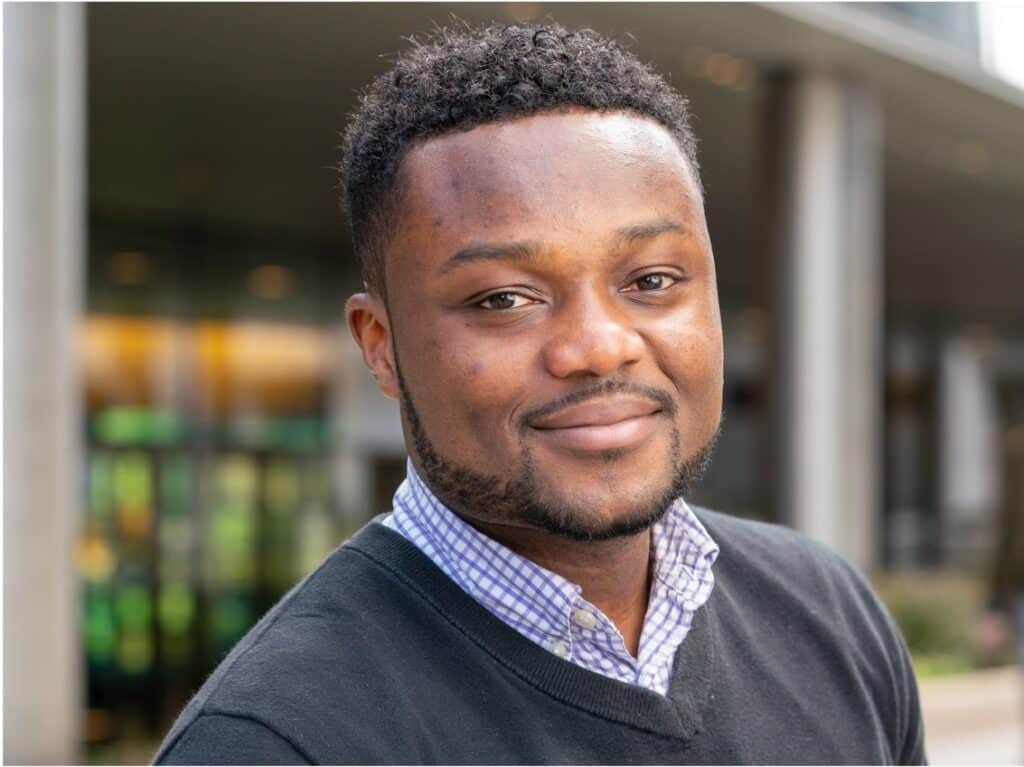
Jimmy Oppong
“For me being part of the Black Community means being part of a group where often but not always you have similar shared experiences, and it is a nice feeling when you are entirely understood as it is a basic human need. A practical example is like being somewhere foreign around the world and coming across someone from your hometown or country, it gives a sense of familiarity. I think as children of history we should all remember the sacrifices our forefathers and foremothers have done for us all to reach where we are and cheers them. I think the most inspiring person would be Martin Luther King Jr with this quote “Judge a man not by the colour of his skin, but by the content of his character”. It is such a powerful phrase and applies to all of humanity. Regardless of all the challenges he faced, he was still able to see the bigger picture, because there are more things that unite us than divide us as humanity.”
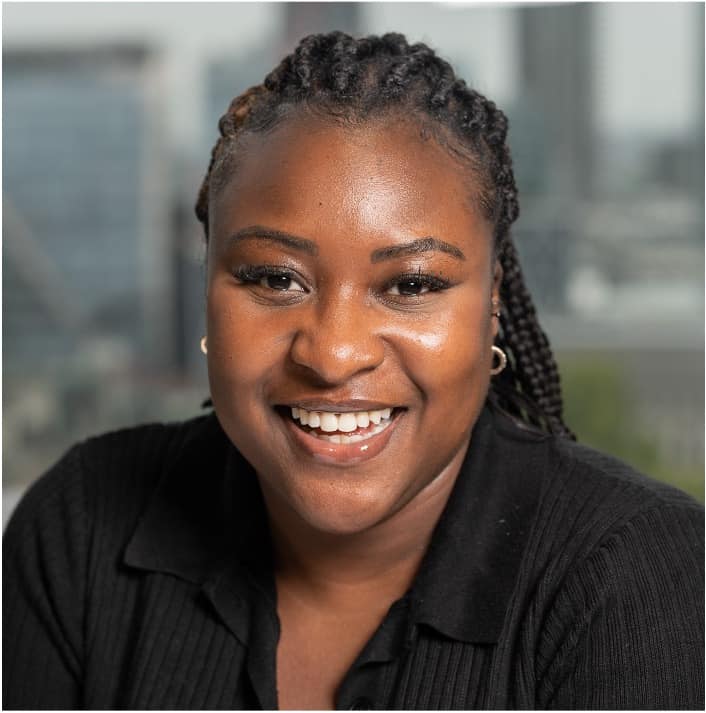
Hannah Benson
“Growing up in an African household, I was taught to love and cherish my culture – it didn’t matter that I was born British, in our household my parents only spoke Yoruba to me. I learnt from an early age that I had the best of both worlds – the chance to grow up in a developed country with the appreciation of my identity and who I was. Black History month is important to me because it gives you an appreciation of all the diverse cultures and backgrounds – something that truly makes us unique and being able to celebrate that is beautiful.“

Ian Antwi
“Being a member of the black community for me, is being a part of a group defined by one shared characteristic. One that, isn’t homogeneous in nature. It is a group with fantastically diverse cultures, experiences and histories. A group that has shaped the arts and global cultures even amid centuries long oppression. A group whose achievements and influence on humanity’s development stretch back thousands of years. A group that has demonstrated some of the highest human virtues in the face of hate. We live in a world where your skin colour is a part of your identity, and the first thing people often see. I am many things, and I am proud to be black. Black history month (BHM) for me is our opportunity to recognise these things, whilst reflecting on the truths of our often misunderstood, shared global history. It is also an opportunity for us to look forward and think about the part we want to play in shaping a more positive future. It is about truth, understanding, inspiration and the resolve to build something better. That is what BHM means to me. ”Forwards ever, backwards never” – Dr Kwame Nkrumah, first president of the Republic of Ghana.“
Chigozie Okeke
“I grew up in a village outside of London, so at an early age I was already aware that I was black. It sounds obvious and silly saying it aloud but in case anyone was unclear children not only see race but feel it when you are the anomaly. As the only black girl in a class of 32 my journey into the black community was attending Nigerian community events, going to the market with my mum, wrangling my hair into braids and putting in extra hours of study whilst I saw my classmates playing outside, as I needed to “work twice as hard” to get ahead. Now I am older, albeit a little wiser I have realised that being part of the black community is complex, there is a joy, and laughter, an acceptance of identity through what sometimes is just a nod, a connection through making your hair workplace appropriate whilst still adding that little bit of flair, navigating your way through as the first generation, a richness and diversity in culture, not to mention the most amazing food! But at times there is a sadness, an expectation of better world that is often opposed by the news and the burden I carry to do right by the next black person in this non-existent line. Black history month for me is the opportunity for the entire story to be told. It is an opportunity to see myself reflected in the narrative and to be seen through a lens that is more than just slavery, to provide a voice for stories that need to be told. We didn’t “just appear” we were there and should be heard.“
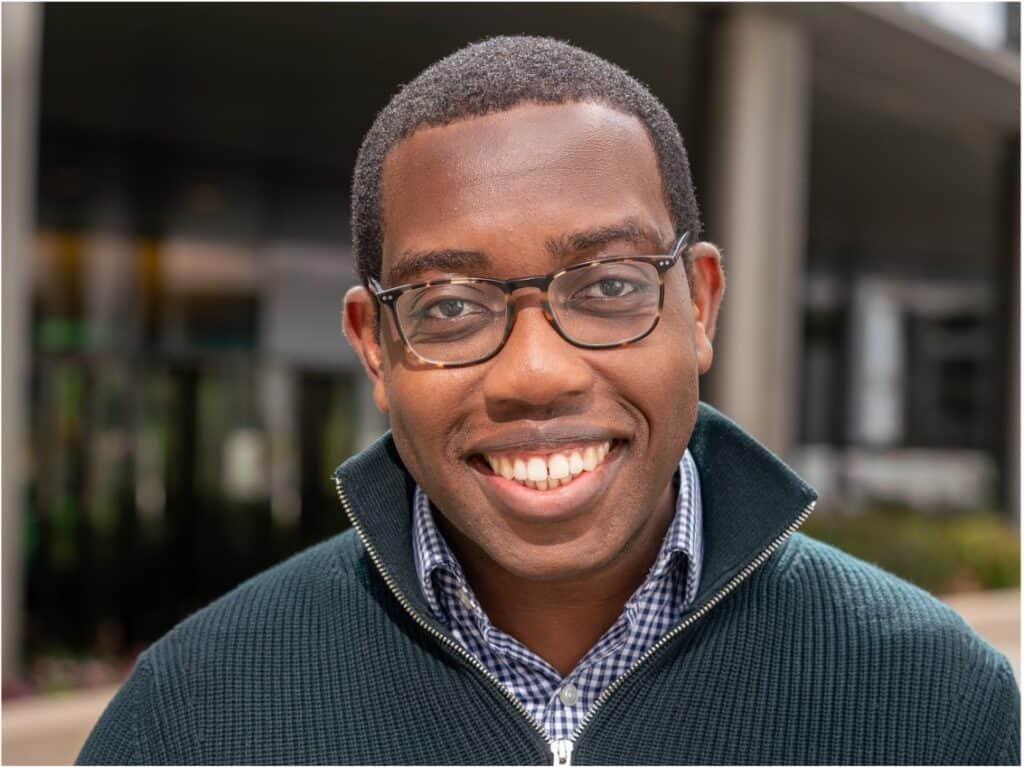
Amatey Doku
“Celebrating Black History month is incredibly important to me. It’s a time to reflect, learn and celebrate the Black community in the UK, revealing often hidden stories and experiences. I’m always surprised by how much I learn myself. The education system in the UK has historically omitted significant aspects of the Black community’s history and past. For those in the community, our collective history is often something we don’t learn until we leave the school system. It’s not just about educating others outside the black community about our history and culture. The Black community, history and culture in the UK is incredibly diverse and multifaceted and there’s always so much to learn from each other. Working alongside colleagues from a diverse range of backgrounds is important for me and alongside that seeing black colleagues in more senior positions to me is of particular importance: It sends a strong signal that progression is possible for people who look like me. “
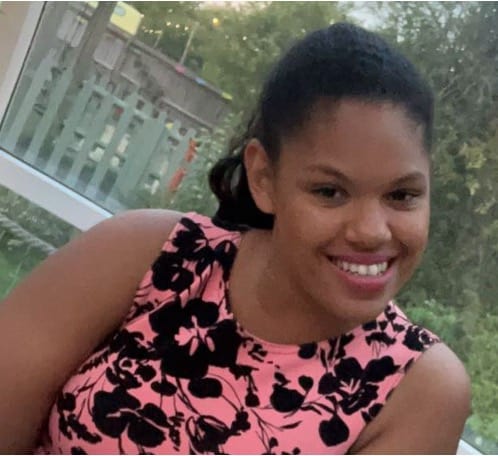
Michela Thomas
“I am multi-ethnic but I am particularly proud and value my Jamaican heritage and its culture, for example the good food, varied music, and good vibes. If you like Jerk Chicken, you must go to Jamaica to try real Jerk Chicken. In Jamaica they have a motto “Out of Many, One People” meaning they are ONE regardless of race, class, age, or gender, they all Jamaicans and united! Black history month is important as it celebrates the culture and history of black people and helps us to learn about our heritage, culture, and roots.“
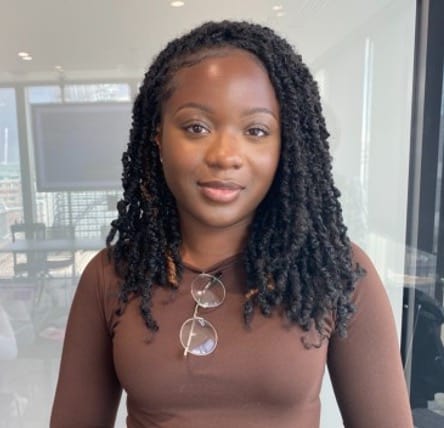
Akleia Louis-Frederick
“To me, being a black person in the UK means to be a part of a diverse and multi-cultural community with shared experiences, and an understanding of the complexities of dual nationality. It is to belong to the Black British community and shared culture conceived over time as those of African and Caribbean decent migrated and sought to make the UK their home. But it also means honouring the cultural heritage of our countries of origin, ensuring that this awareness and familiarity of where we have come from is celebrated and passed down.
Black is beautiful, resilient, resourceful, and rich in history. My interpretation of being Black-British is to have two ‘homes’, one in London, and a strong sense of belonging to the country of my grandparents’ birth.”


